Tuesday, 15 November 2016

HOW DO CHIP CARDS WORK? (Credit Card)


For most of our purchases we usually use credit cards which have magnetic stripe that stores the data inside it.

so when you swipe your credit card or debit card in a swiping machine , your card just sends the stored card number and expiration date in an insecure manner , so it can be quite easily stolen by hackers in a variety of ways and can use your card at best to waste your money and at worst can buy some illegal things which can get you in trouble and most skilled hackers can inject malware into these purchase systems as well as ATM's main databases and can steal card numbers as well as pin numbers. Best example is recent hack on Indian bank systems like SBI, ICICI, in October 2016.

And there are more secure cards that contain small chip on it; these are referred as EMV cards. What these cards do is, they send a random generated token that is valid for that transaction only and cannot be used later.

 These encrypted tokens are decrypted by the terminal. The terminal can use encryption keys to get your account information and can validate your transaction. so even if a cyber criminal gets that token it is of no use....

 Since these codes are one-time usable, And even if you lost your card it is impossible for an attacker to clone your card.
Even if he uses your original card he had to know the PIN.

But we cannot stop him by simply using your card number for online purchases, don't worry today’s systems are more secure and they require OTP for authentication.


You must be very careful and shouldn't tell any of your details to unknown persons and never ever trust who asks your details and pin on a phone call or message, no bank asks for pin or card number.

Monday, 14 November 2016

HAVE YOU HEARD ABOUT MICRO ATM’S? CHECK IT OUT BELOW


TO CONTROL THE SITUATIONS CENTRAL GOVERNMENT INTRODUCED MICRO ATM”S. 

We know ATM (AUTOMATED TELLER MACHINE) but mostly many of them Do not know about MICRO ATM.

MICRO ATM”S are nothing but PORTABLE MACHINES to withdraw money   After swiping in to ATM CARD these machines will be linked  with  GPRS Connection and  connects to the bank network and it will display the total balance present in our account then we can withdraw the  amount. After entering needed amount banker who carries the MICRO ATM”S will give the money   to us according to the limits issued by the bank then the amount debits from the account.

 Actually this MICRO ATM”S are mostly used by business correspondents.  Also first used by the bankers to carry rural villages to serve there services throughout villages and in this MICRO ATM money deposit feature also introduced. According to The present situations bankers introduced services to take old notes and to withdrawal new notes

Actually in a ATM we can do 80-100 transactions at a day and to maintain these ATM”S nearly 20 thousand rupees will cost for these machine. And rent, telecom charges annual maintenance, security, etc also need to maintain this ATM"S. But coming to the MICRO ATM”S Cost will be approximately only 20,000/- and also we can carry this MICRO ATM”S to different places to serve the bank services so it will not have any other maintenance costs and to use this MICRO ATM just need to charge and it will be connected to GSM Sim card Service so we can carry to different places where ever signals are present but it has a limit that we can withdraw money the total amount which present in our account. But at present some people saying that money was completed in Banks at present. 

Sunday, 13 November 2016

DID YOU KNOW WHERE NEW INDIAN (CURRENCY 500,1000 Rupee)s WAS PRINTED ?


After Modiji taking a sudden decision to Bann Currency (500, 1000 Rupees). New currency to be printed. To print New Currency many of Printing Centers are there. But Modiji Ordered that new Currency to be print at Rachangari in Mysore then INDIAN RESERVE BANK CURRENCY NOTE PRINTING CENTER. Collected all the materials. This New Currency (500, 1000/- rupees) printing process was going from before 6 months. At last new currency (500, 1000/- rupees) printing was completed.

These Currency Printing center (INDIAN RESERVE BANK CURRENCY NOTE PRINTING CENTER) have lot of features with good railway, high technology paper service, and special waterlines.


 From many days at SOUTH MYSORE MANDAKALI AIRPORT. Here Airport services were stopped here after completion of printing of New Currency printing. Continuously many Special Air services were run for one week and sent all the new printed currency sent to Delhi from there all the new printed currency sent to all the banks. At the time after releasing 1000 rupees note these notes also printed in the same Printing center (INDIAN RESERVE BANK CURRENCY NOTE PRINTING CENTER). 

Saturday, 12 November 2016

Did You Know the Cleanest Village of Asia is in India?


MAWLYNNONG, MEGHALAYA is FAMED FOR its CLEANLINESS.
IN 2003, it WAS DECLARED as “THE CLEANEST VILLAGE OF ASIA”.
THERE are STRICT RULES to MAINTAIN THIS VILLAGE.
ALL WASTE is CONVERTED IN TO MANURE.
IT IS MANDATORY TO HAVE SOAK PITS and TOILETS in EACH HOUSE.

SOLAR ENERGY is HARNESSED THROUGHOUT THE VILLAGE.

Friday, 11 November 2016

WHAT WILL GOVERNMENT DO ALL THE BANNED NOTES 500 and 1000 Rupees?


As we know that 500 and 1000 Rupees Currency Notes are banned that Banned notes will be sent to RBI Issue Office. They will send that Notes to CURRENCY VERIFICATION and PROCESSING SYSTEM and divides in which are able to Recycle and not able to Recycle.


BIMAL JALAN RBI Governor (2003) he introduced a Technical Proecess (CVPS) which divides all the notes at a perfect temperature which are not able to use and they can process 60,000 at a time these system have a technology that they can filter Duplicate notes and Original Notes and decides whether they are able to Recycle are not. This Machine Cuts all the duplicate notes in to pieces and they will cut all the Original notes in correct border and all the remained pieces after cutting and gives for tenders for Industries for Industrial use in BRICKLETS Structure. 

Thursday, 10 November 2016

INFO TAX RATE OF 2016-17


Your income is taxed according to income tax slab rates. Tax slabs have not changed since financial year FY 2014-15 (assessment year AY 2015-16). Income tax slab rates are same for these 3 financial years – FY 2014-15, FY 2015-16 and FY 2016-17.


Income Tax Slab Rates for FY 2015-16(AY 2016-17)
[These income tax slab rates are also applicable for FY 2016-17(AY 2017-18) and FY 2014-15(AY 2015-16)]
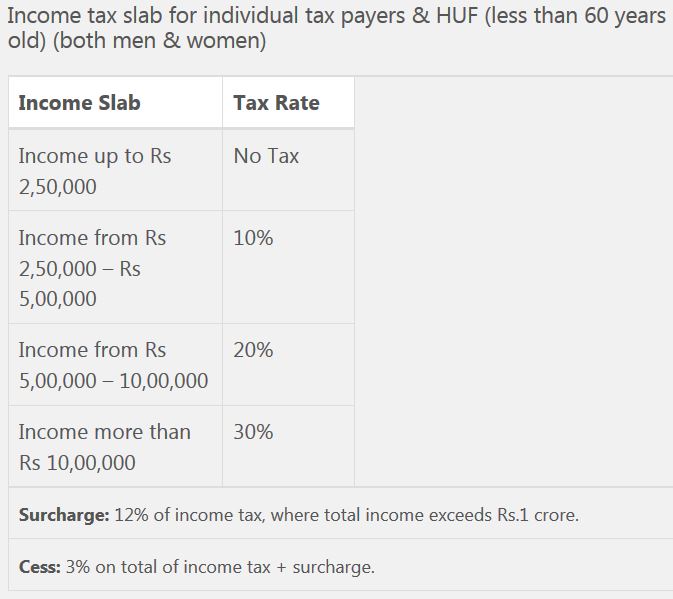
Income tax slab for individual tax payers & HUF (less than 60 years old) (both men & women)


How to calculate income tax from income tax slabs?
This example explains how to apply tax slabs to calculate income tax for FY 2015-16(AY 2016-17).

Rohit has a total taxable income of Rs 8,00,000. This income has been calculated by including income from all sources such as salary, rental income and interest income. Deductions under section 80 have also been reduced. Rohit wants to know his tax dues for FY 2015-16.


Income tax slab for domestic companies for FY 2015-16(AY 2016-17)

If you are registered as a company, the income tax slab rates do not apply to you. Domestic companies are taxed at 30% on their total income. A 5% surcharge is payable if income is more than Rs 1 crore but less than Rs 10 crore. If total income is more than Rs 10 crore, 10% surcharge is applicable. 

SOURCE : cleartax.in

Wednesday, 9 November 2016

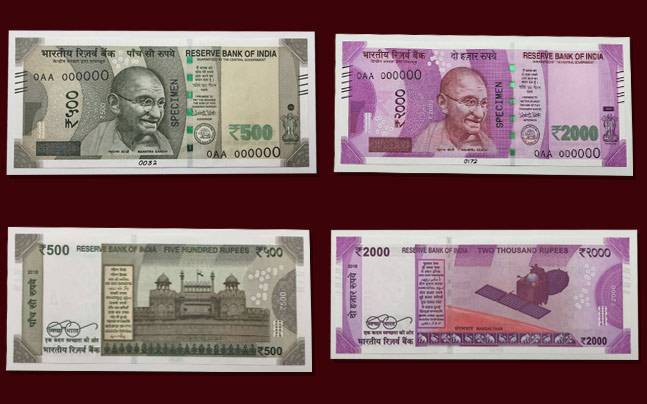
OFFICIAL NEWS FROM RBI ! No NANO TECHNOLOGY on 2000 Rupees Note. and ABOUT ORIGIN OF 2000 RUPEES NOTE


The Reserve Bank of India has dismissed as “figments of imagination” rumors that a new series of Rs 2,000 will come with a GPS-chip that will help government track illegal money transactions.

“Such a technology does not exist at the moment in the world, then how can we introduce such a feature?” RBI spokesperson Aplana Killawala told News18.

She said that the RBI website had detailed the security features of the new note and that there was nothing else besides what has been officially said, especially any possibly of a GPS-enabled chip.


Reports of a chip-enabled series of new currency notes had surfaced immediately after Prime Minister Narendra Modi announced on Tuesday that the government was scrapping the existing denominations of Rs 500 and Rs 1000 currency notes.

In a different era, another prime minister of Gujarati origin had shocked the nation with a similar and sudden announcement.

Finance minister-turned-PM Morarji Desai informed the nation on the night of January 16, 1978, about his decision to demonitise Rs 1,000, Rs 5,000 and Rs 10,000 notes.

It was declared that the notes would cease to be legal tender by the time the banks closed on that day. The next day, that is January 17, all banks and treasuries of governments were kept closed, like they are closed today.

HM Patel, a former finance secretary and also hailing from Gujarat, was the finance minister that time, and Desai was heading the newly formed Janata government after defeating the Congress post Emergency debacle. And he was pretty kicked about curbing black money though there were whispers that he was taking on the opposition Congress and other parties by "freezing their secret funds".

Between now and then, however, there is a huge difference: Desai didn't have the backing of then RBI governor I G Patel unlike Modi, who is supported by Urijit Patel.

To implement the scheme, the government brought in the High Denomination Bank Notes (Demonetisation) Act, 1978. This Act banned the transfer and receipt of high denomination bank notes. Any contravention, such as false declaration by depositors, was made punishable and could send a person to three years in jail.

Did it work? Not entirely, because Rs 1000 notes made a comeback before this Act could complete its silver jubilee. In fact, it was the NDA government that reintroduced them in 1998.


First, a brief look at Demonetisation drives in 5 points:

High denomination notes, that is Rs 500 and above, started circulation in India in 1934. The highest denomination note - Rs 10000 - ever printed by the Reserve Bank of India was in 1938.
The Rs 1000 and Rs 10000 banknotes were demonetized in January 1946. Yes, that was the first time such a thing was enforced, again for curbing black money.
They made a comeback in 1949.

The second demonetisation, as mentioned above, was in 1978 by Morarji Desai-led Janata government - Rs 1000, Rs 5000 and Rs 10000 notes were abolished.

Again, high denomination notes returned within three decades.
How did it impact the public in 1978?
The impact was limited. Unlike today, not many people possessed currency of such high denomination.

"I have never seen a Rs 1,000 note. I am not bothered" - here's how a government employee reacted to the move in 1978, as per this Telegraph report.

This excerpt from a TOI report will put the picture in perspective. If you had a Rs 1000 note in 1978, you could buy 5 sq ft of real estate space in posh south Bombay. Today, a Rs 1000 note won't buy you even a hundredth of a square foot in that area.

It had a palpable effect, however, on the price of gold and commodity that dropped 5% and 10% within a week of the announcement.
Did it work?

Not in entirety, say economists, because high denomination notes returned eventually. And, such notes, as we know are the basis of corruption and illicit deals related to unaccounted money.

Abhiroop Sarkar, Professor at Indian Statistical Institute, says the 1978 move had no effect on the circulation of black money.

"That's because people don't stack black money in cash. Rather, they stash it in undisclosed accounts in Swiss Banks. So demonetisation won't affect the big fish," he explained to IANS.
Here, it's pertinent to mention that touts made most of the move in initial days. As people didn't want to deposit their money in banks fearing tax problems, they fell for the touts instead. Anil Harish, a senior advocate told TOI, “At places like Crawford Market and Zaveri Bazar, people were selling Rs 1,000 notes for as little as Rs 300.”

Will it work now?
It can't be ruled out. Because the fight against black money is a continuous one and not a one-stroke solution. Also, in today's digital, more transactions are happening through electronic transfers. Also, far more rural people have bank accounts now than they ever did.
So for now, it's just wait and watch.

SOURCE: NEWS18&  Schoophoops.com